Smart Landscapes · The Controller
One app.
Water and light.
Scapes is an authorized Rachio Pro. Every property we wire runs the same controller — and now the same app that waters the landscape dims the lights over the patio.
Why We Standardize
One controller,
every property.
Most irrigation problems are not equipment problems. They are programming problems on a controller nobody wants to touch — a beige box in the garage with a dial, a manual that went missing in 2011, and a schedule set by whoever installed it.
We standardize on Rachio for one reason: the homeowner can actually use it. It lives on the phone already in your pocket. When you are out of town and it rains, the system already knows. When new beds go in on the north side and the run times change, we adjust it from the studio without driving out.
It matters on our side too. Every property under a Scapes program runs the same controller, so any crew member can walk up, read the zones, and know what they are looking at. No dialect, no guessing.
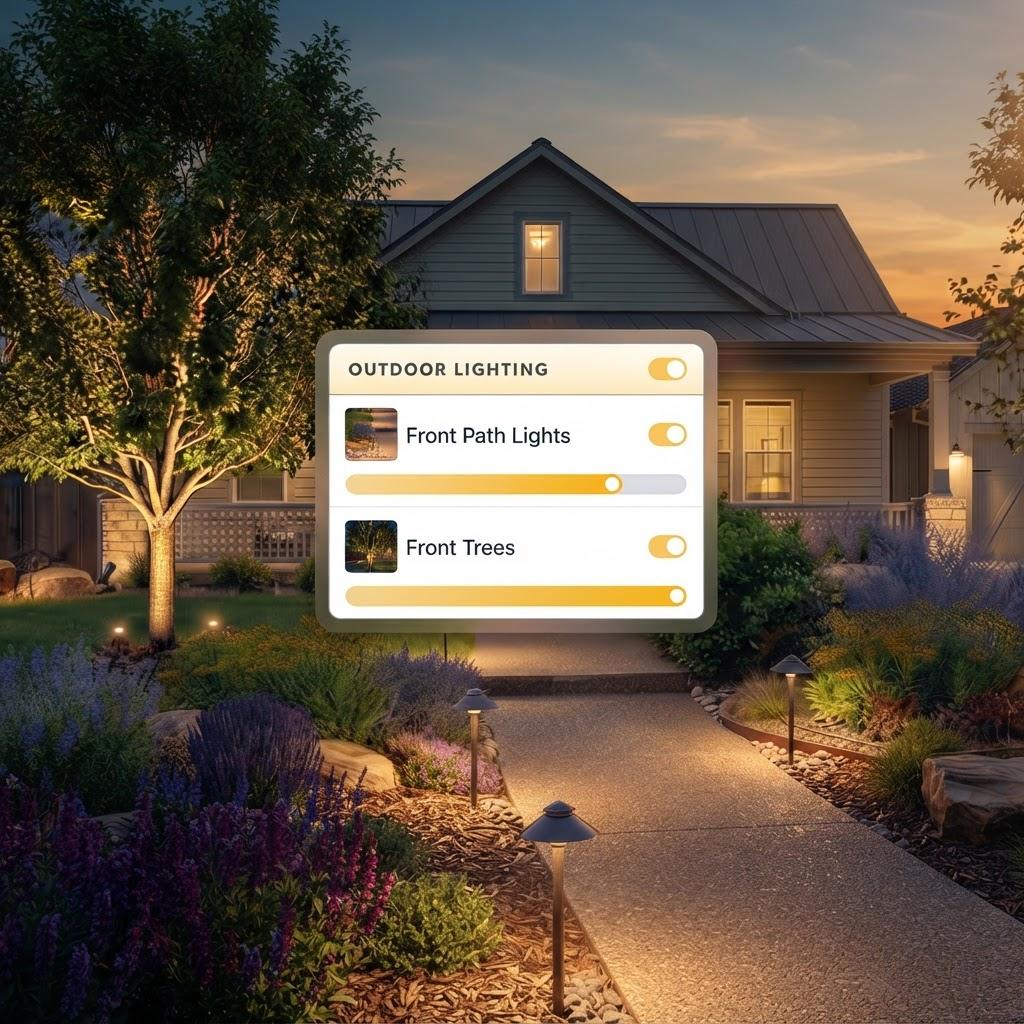
Now the same argument extends to the light. Rachio built a lighting controller that runs in that same app — so the property has one place it is managed from, not four.
The Hardware
Three pieces.
One app.
The water, the light, and the weather the property actually gets — not the weather at the airport nine miles away.
Water
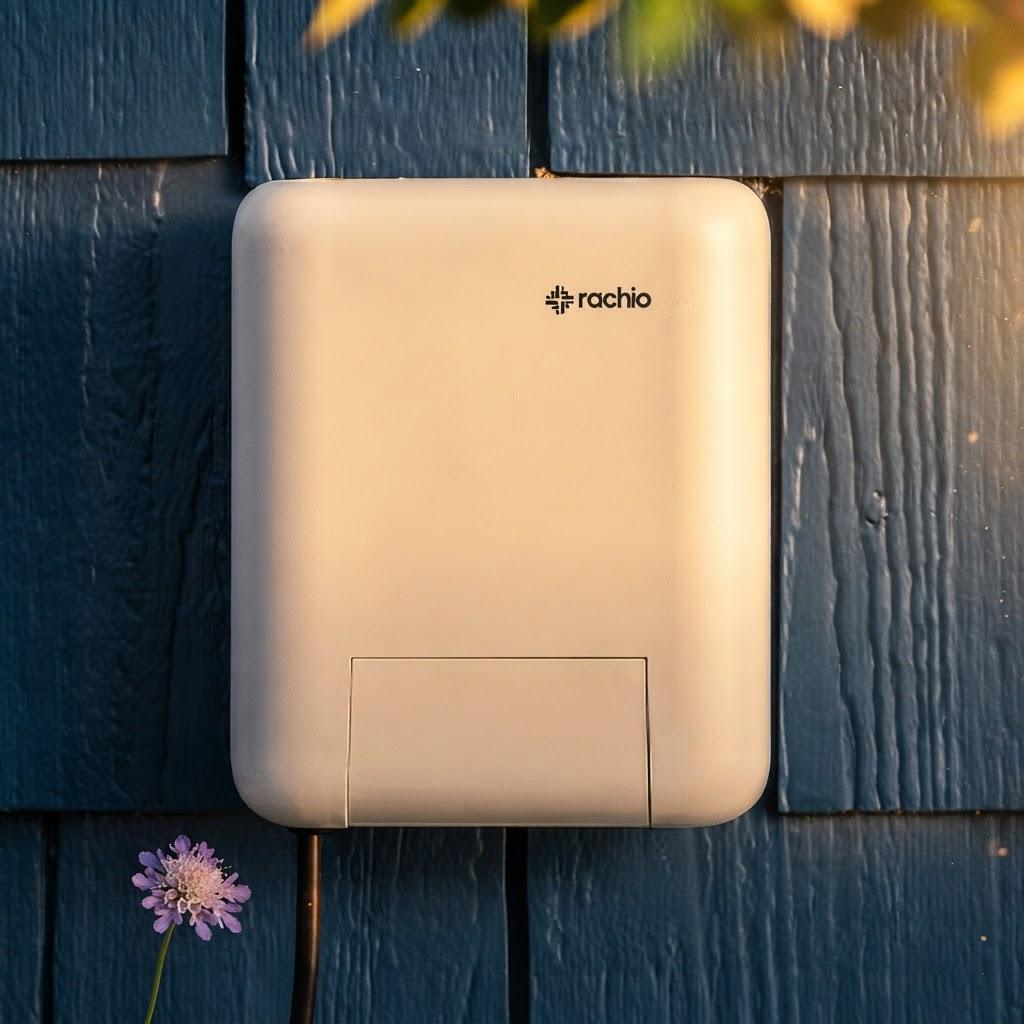
Smart Sprinkler Controller
The controller we install and the one we program. It reads the forecast and skips the cycle you were going to pay for anyway, then shifts run times as the season moves — watering the same in March and in August is how a lawn gets hurt.
- ZonesSix to sixteen, set per bed, per turf area, per drip run
- WeatherRain skip and seasonal shift, no rain sensor to fail
- SavingsMost users see 20% or more water saved against a traditional clock
- InstallIndoors as standard; outdoors it takes a weatherproof enclosure
Light
Smart Lighting Controller
Low-voltage landscape lighting on the same app as the water. Scenes and dimming instead of a timer you reset twice a year, and schedules that follow sunset as the season moves it.
- Power200 watts across three independent zones
- Lamps12–15V LED or incandescent; dimming by PWM
- ScaleMultiple controllers managed as one — front and back
- InstallRated for outdoor mounting, no enclosure needed
- RecoveryRemembers its settings through a power outage
Weather
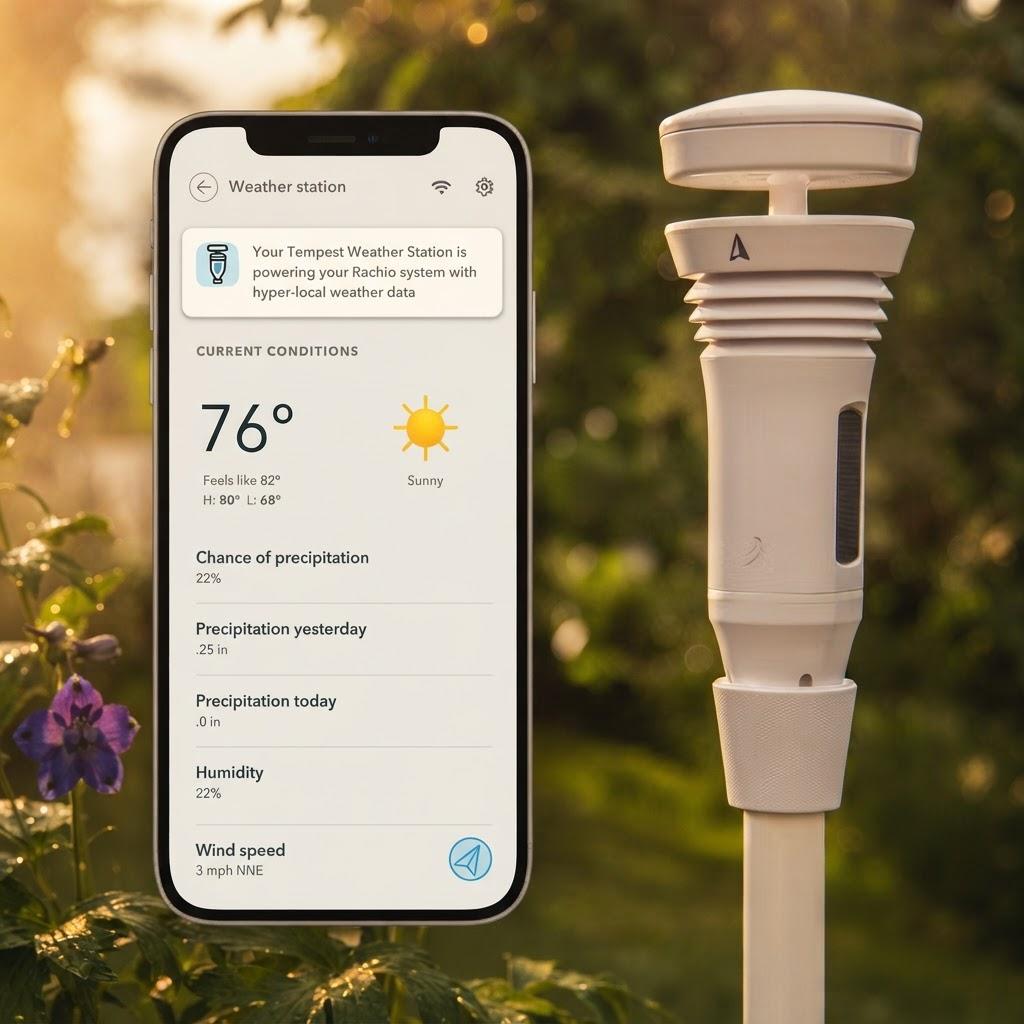
Tempest Weather Station
The optional piece that makes the rest smarter. A weather station on your own ground becomes the controller’s weather source, so the schedule responds to the rain that fell here — not to a regional average.
- SensesRain, wind, light, temperature, humidity
- DrivesSchedules and weather skips, straight in the Rachio app
- PowerSolar, wireless, no moving parts to wear out
- InstallUnder five minutes, mounted clear of the house
The Light Itself
Three kinds of light.
One composition.
A lit property is not a property with lights on it. Path, accent and flood do different work, and the design is in how they layer.
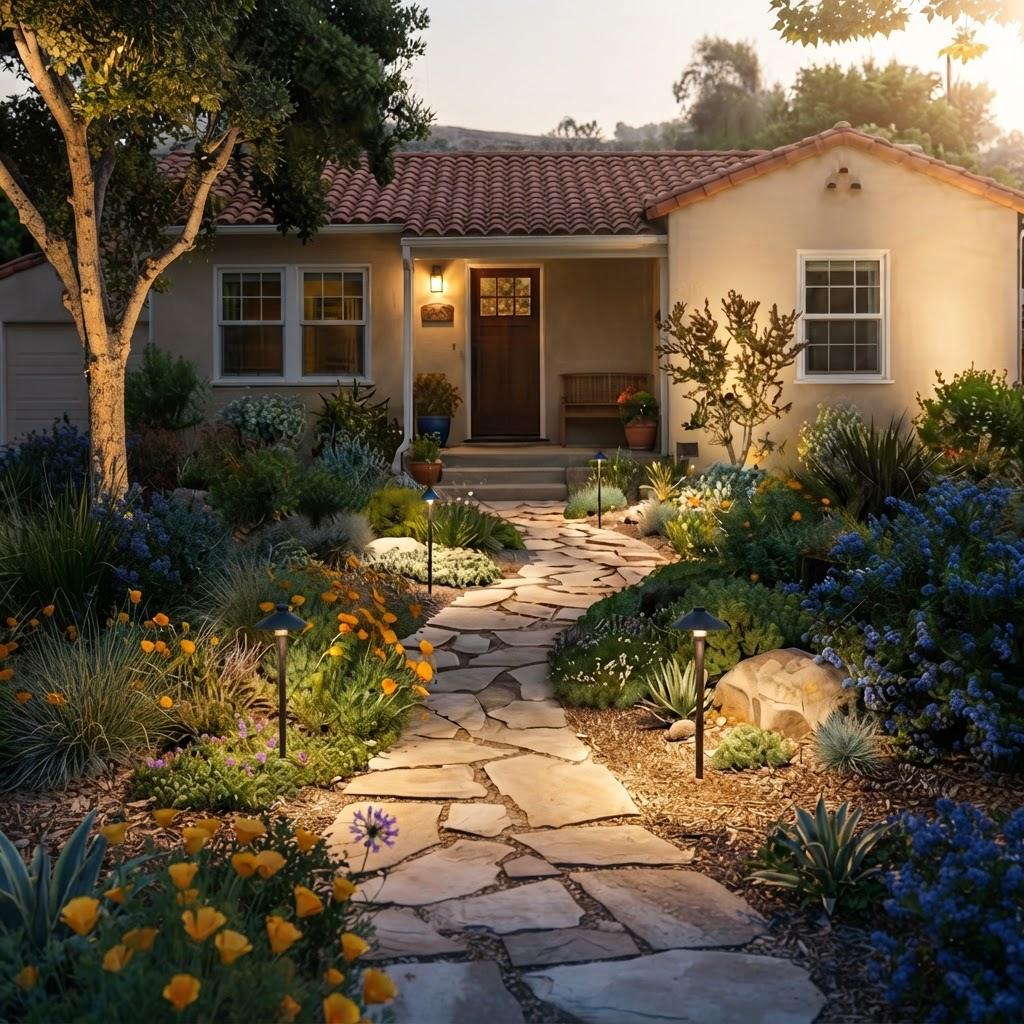
The same ground, lit. Warm, low, and aimed away from the eye.
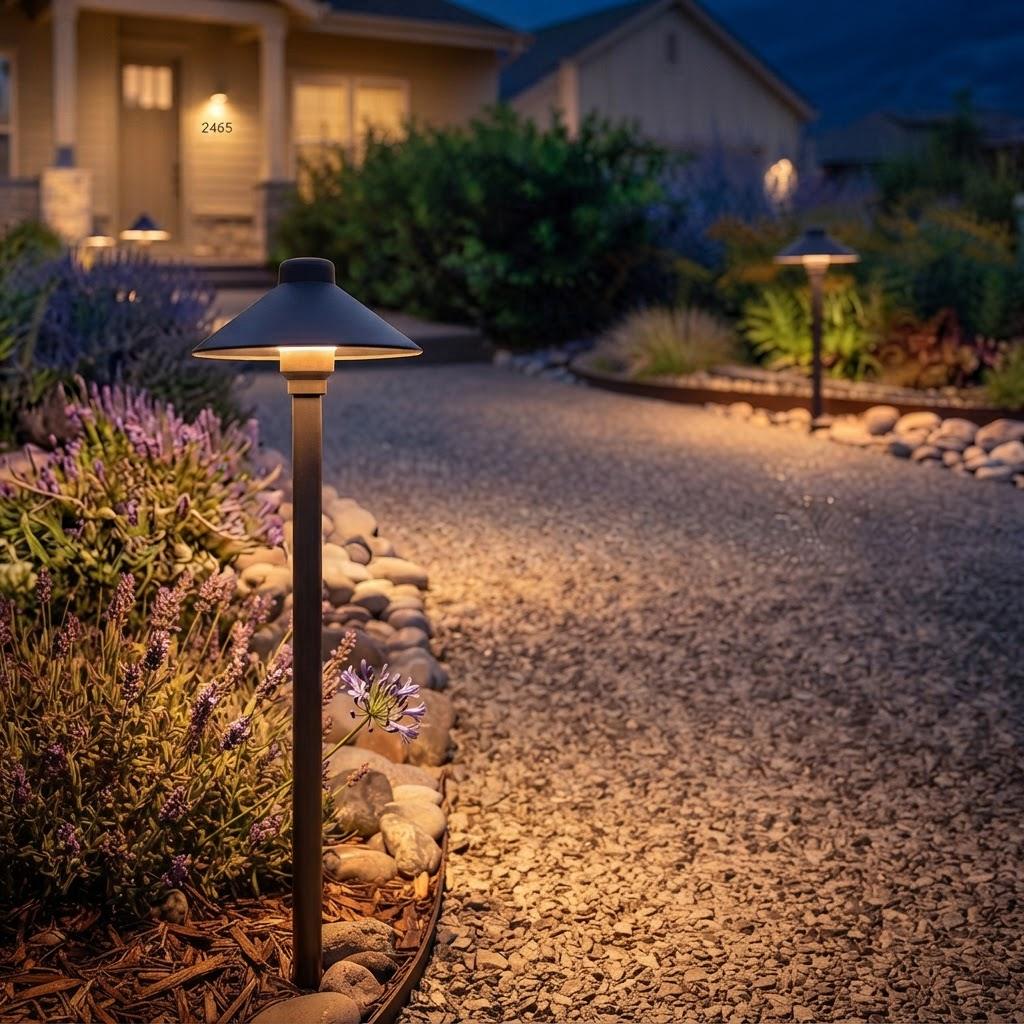
Path
A ground-level glow that guides people and draws the edge of the planting. It is wayfinding first and atmosphere second — the reason nobody steps into a bed in the dark.
One every ten feet or so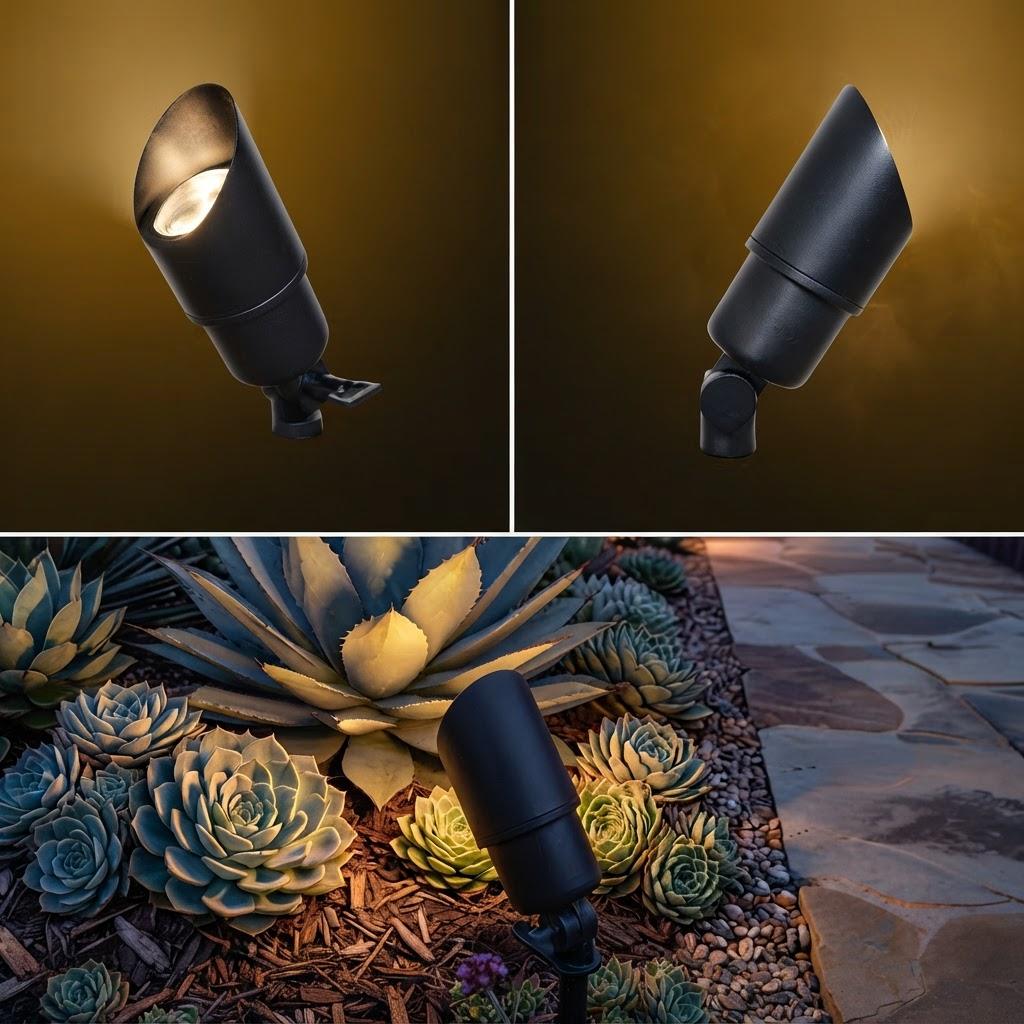
Accent
Focused light that gives a tree its structure back after dark. Aimed up through the canopy it reads as depth, not as a fixture — the difference between a lit yard and a designed one.
Two to three per tree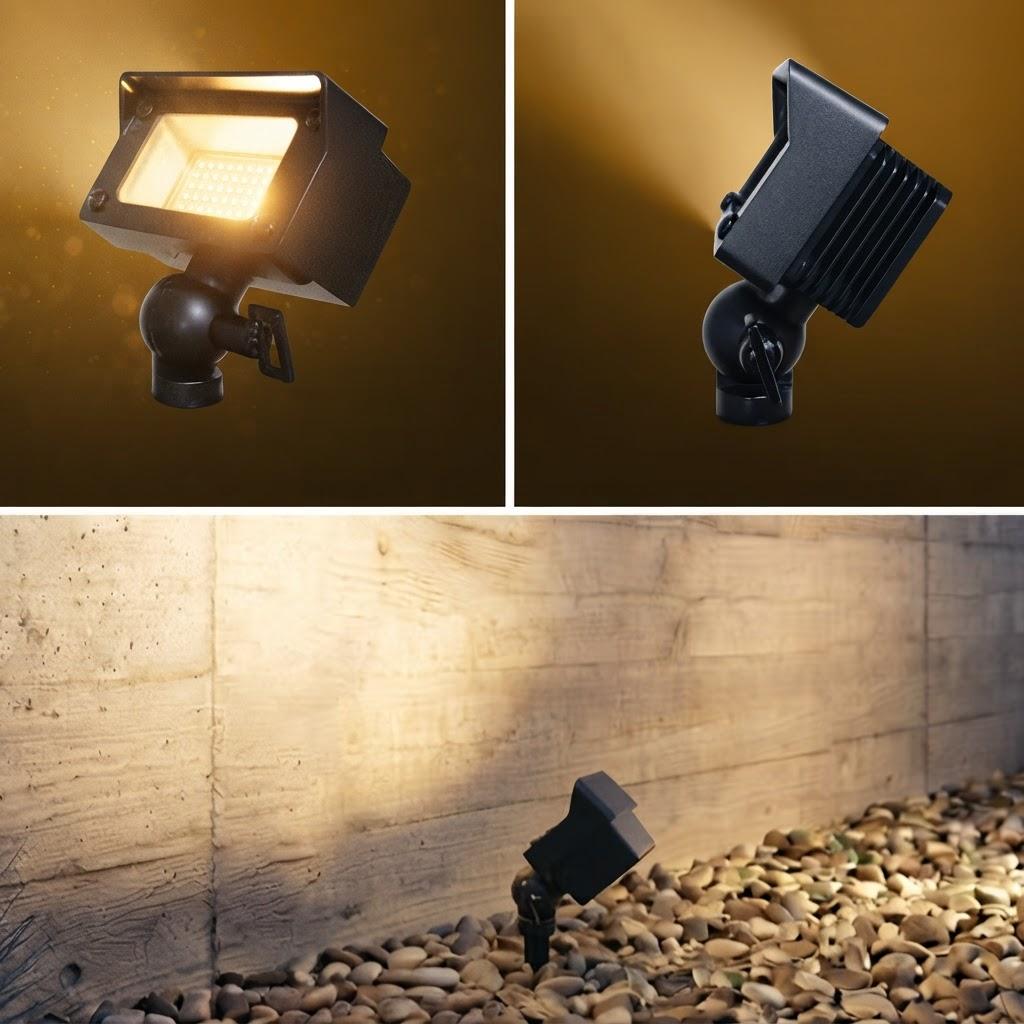
Flood
A wide, even wash that lets the architecture do the talking. Used well it lifts a facade; used badly it flattens one, which is why aim and brightness get set on site, at night.
Set by eye, after darkHow You Touch It
A scene, not
a setting.
Zones
The finest control. One run of lights, on its own — the back beds while you finish something out there, nothing else.
Areas
Zones grouped by what they are, even across two controllers. All the path lighting. The front of the house. The trees.
Scenes
Areas at chosen brightness, named for how you live. Dinner. Late. Away. One tap, and the property changes character.
You do not look at this technology. You feel it — and then you forget it is there.
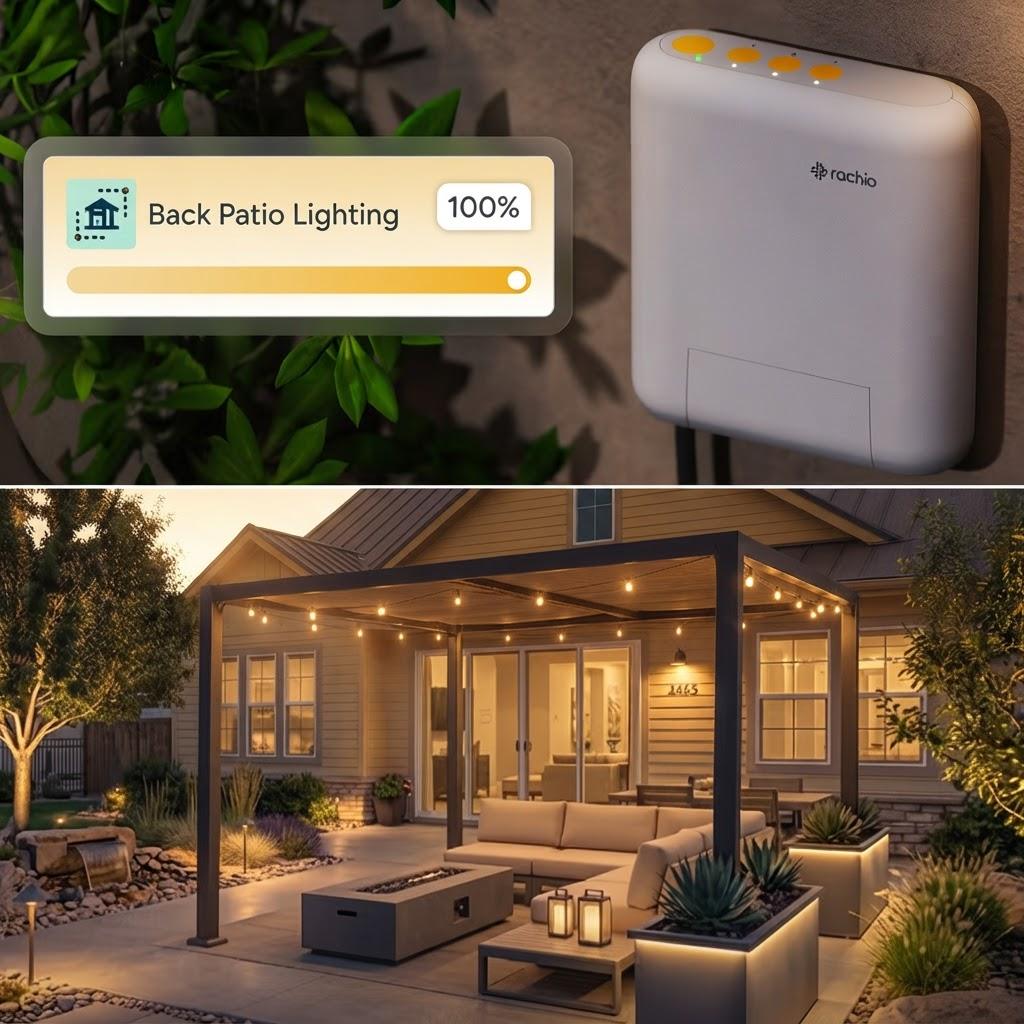
One area, one brightness, one tap. The patio at the level you actually sit in.
What It Means For You
Three things worth
knowing.
No subscription required.
You buy the hardware once and the system runs complete — scheduling, rain skips, seasonal shift, scenes, dimming, the app. There is a paid tier for a few advanced extras. We will tell you honestly whether your property is one of the few that wants them. Most are not.
It reads the weather.
The system watches the forecast and skips what the sky is about to do for free. Add a Tempest and it stops forecasting altogether for your yard — it measures it. Over a Houston summer that is real water and a real line on the bill.
It speaks Matter.
Matter is the open standard the smart-home industry finally agreed on, and the lighting controller is certified for it. Apple Home, Alexa, Google Home — and it will still work when you change your mind about which one you use.
The Part That Is Our Job
Good equipment,
actually set up.
Buying the controller is the easy half. We have walked onto properties with excellent hardware running a schedule that waters the shade beds and the full-sun turf on the same clock — equipment doing exactly what it was told, badly.
So we do the part that does not come in the box. Zones grouped by what they actually are. Run times set to the soil and the slope, not the default. Lighting designed to seventy or eighty percent of the transformer — a hundred and forty to a hundred and sixty watts on a two-hundred-watt controller, never the maximum — because that headroom is what keeps a low-voltage system alive for years instead of seasons, and what lets us add fixtures later without starting over.
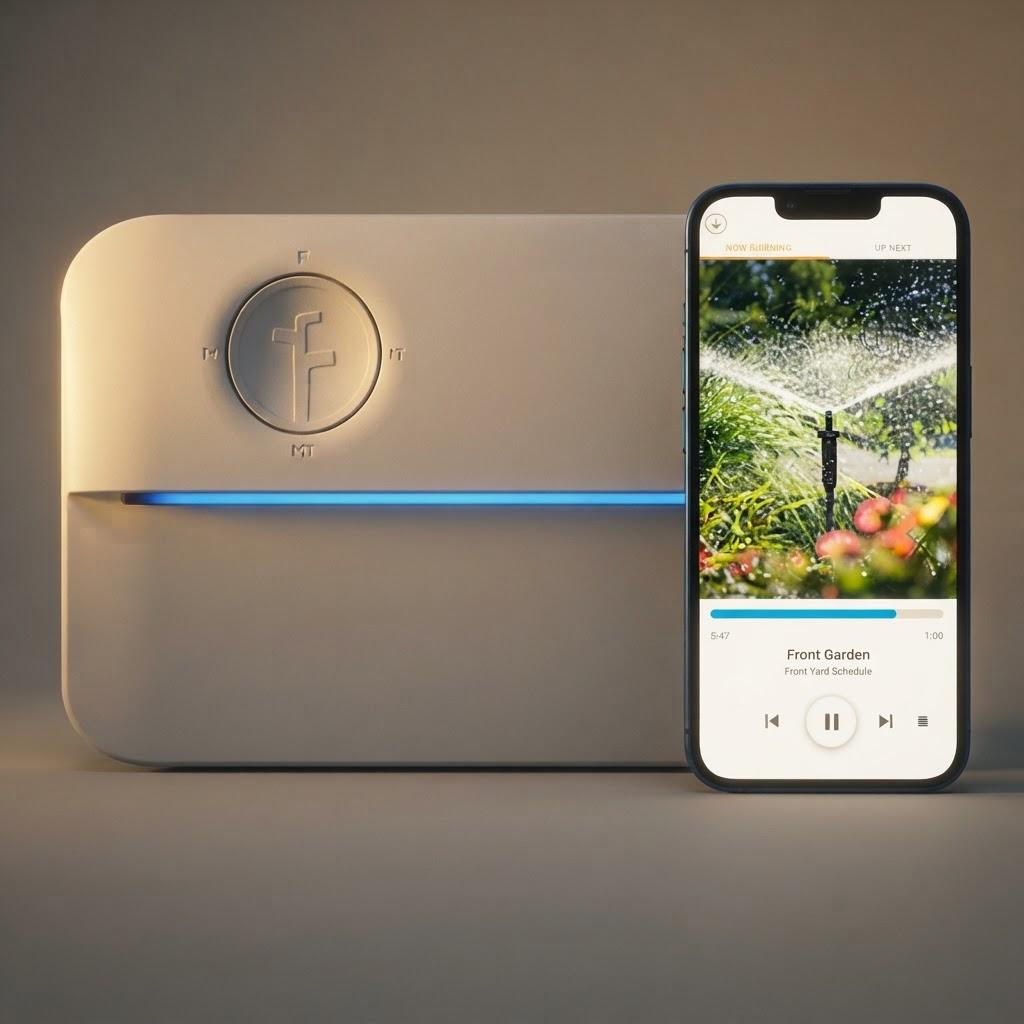
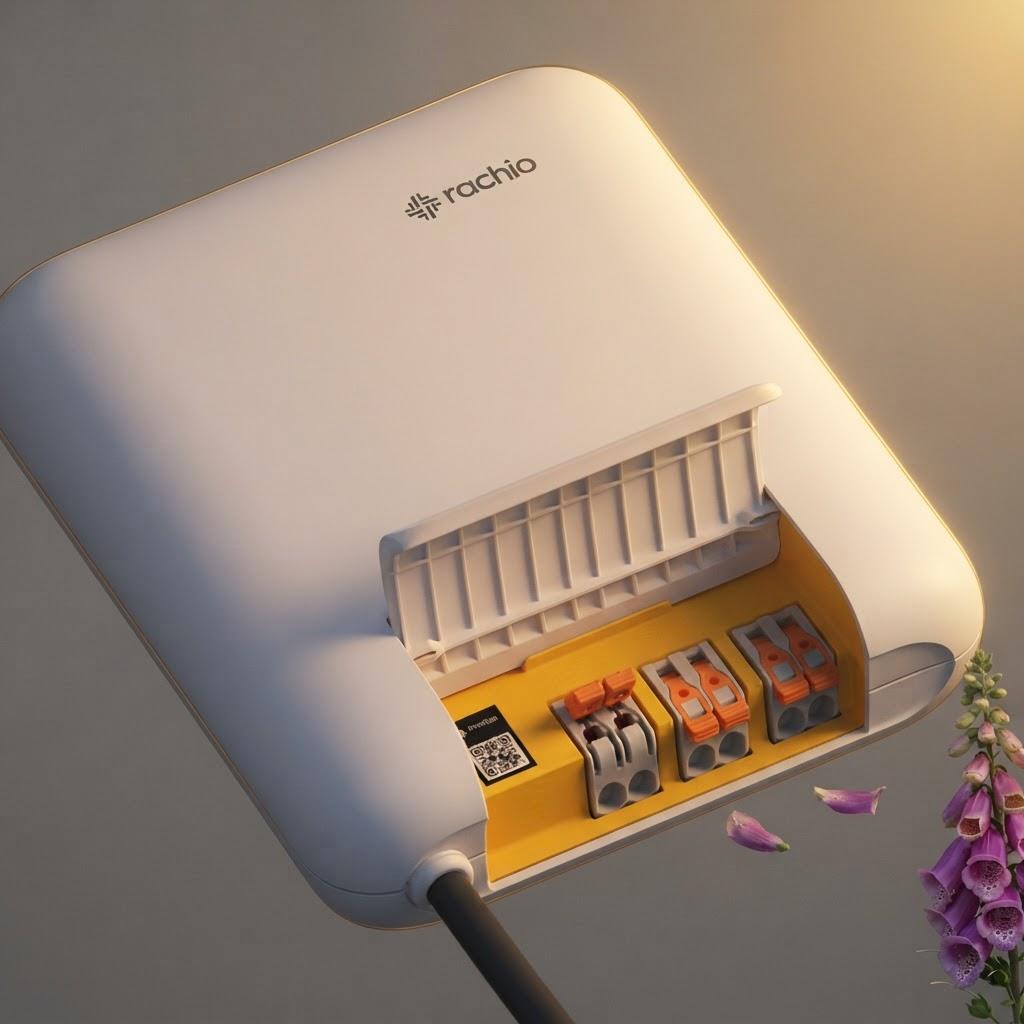
Three zones, two terminals each. What the load is split across is a design decision, not a wiring one.
Fixture aim set on site, after dark, by eye. Scenes named for how you live rather than zone one through nine. And where it earns its place, the system tied into what you already look at — the alarm panel, a camera that turns the back lights on when something moves at two in the morning.
Then we leave it alone, and it leaves you alone.
Begin
Walk it with us.
Show us what is installed and we will tell you what it is capable of that nobody ever set up. Do it from your phone, on the property, in about twenty minutes — no app to install.