Products · The Winter Overseed
Super Grass™
Winter doesn't have to look like winter.
Scapes Super Grass™ is a winter ryegrass overseed, not sod, that keeps a St. Augustine lawn green from fall into spring, for homeowners across Kingwood, Humble, Atascocita, The Woodlands and greater Houston.
When Houston lawns go brown, yours stays green. A triple-blended perennial ryegrass, installed each October, that keeps the property looking alive while the rest of the street sleeps.
Luxury never goes dormant.

The Difference
Not all winter grass is created equal.
Anyone can scatter rye seed. Most of what goes down on this coast is annual ryegrass, forage seed bred to grow fast and tall for pasture. It looks like it.
Super Grass™ is a triple-blended perennial ryegrass, the class of seed you see on championship golf courses. Finer blade. Tighter turf. Deeper green. And far tougher against disease through a wet Gulf Coast winter.
Ordinary lawns wait for spring. Super Grass™ doesn't.
The Winter
Same house. Same January. Different winter.
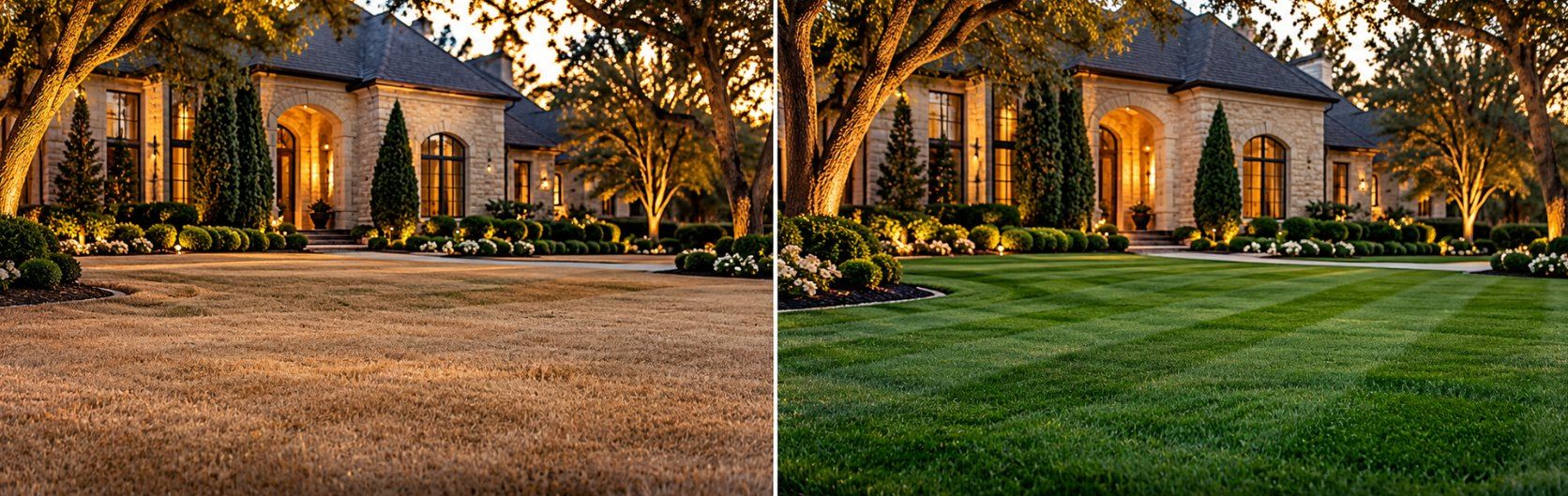 Without Super Grass™
With Super Grass™
Without Super Grass™
With Super Grass™
Left, typical dormant Houston turf. Right, the same lawn with Super Grass™. One looks asleep. One looks alive.
The Method
The Scapes Method. Two weeks of work before the seed.
Anyone can throw rye on a lawn. What separates a winter that looks like a golf course from one that looks like a hay field is the preparation, the seed, and the exit.
We cut it down in stages.
The first cut goes shorter than normal. The second, a week later, goes shorter than that. Stepping the height down rather than scalping it keeps the lawn from going into shock — it sends its energy into the roots, where it is safe for the winter.
A triple-blended perennial rye.
Most winter rye sold on this coast is annual ryegrass — forage seed, bred to grow fast and tall for pasture. Ours is the class of perennial blend found on famous golf courses: short, tight, dense, deeper in color, and far more resistant to disease through a wet Gulf Coast winter.
Sown in a cross-hatch.
Two weeks of low cuts earn the one thing that decides everything — real soil-to-seed contact. We sow in a cross-hatch so no seeding lines show as it fills, and run fertilizer with the seed on the first pass. With warm soil and steady water, it shows up in about a week.
Then it is simply a lawn.
Mowed all winter at the same height as the grass beneath it. A light feed in late January carries it through February — the month that separates a rye job done right from one done cheap.
It leaves the soil better than it found it.
Rye left too long fights the warm-season grass coming out of dormancy, and you pay for it in a thin spring. We taper ours out on purpose. As it fades it returns organic nutrients to the soil and helps the established lawn wake up strong. One thrives while the other sleeps, then feeds it on the way out.
The Street
January on the cul de sac. Guess which one is ours.
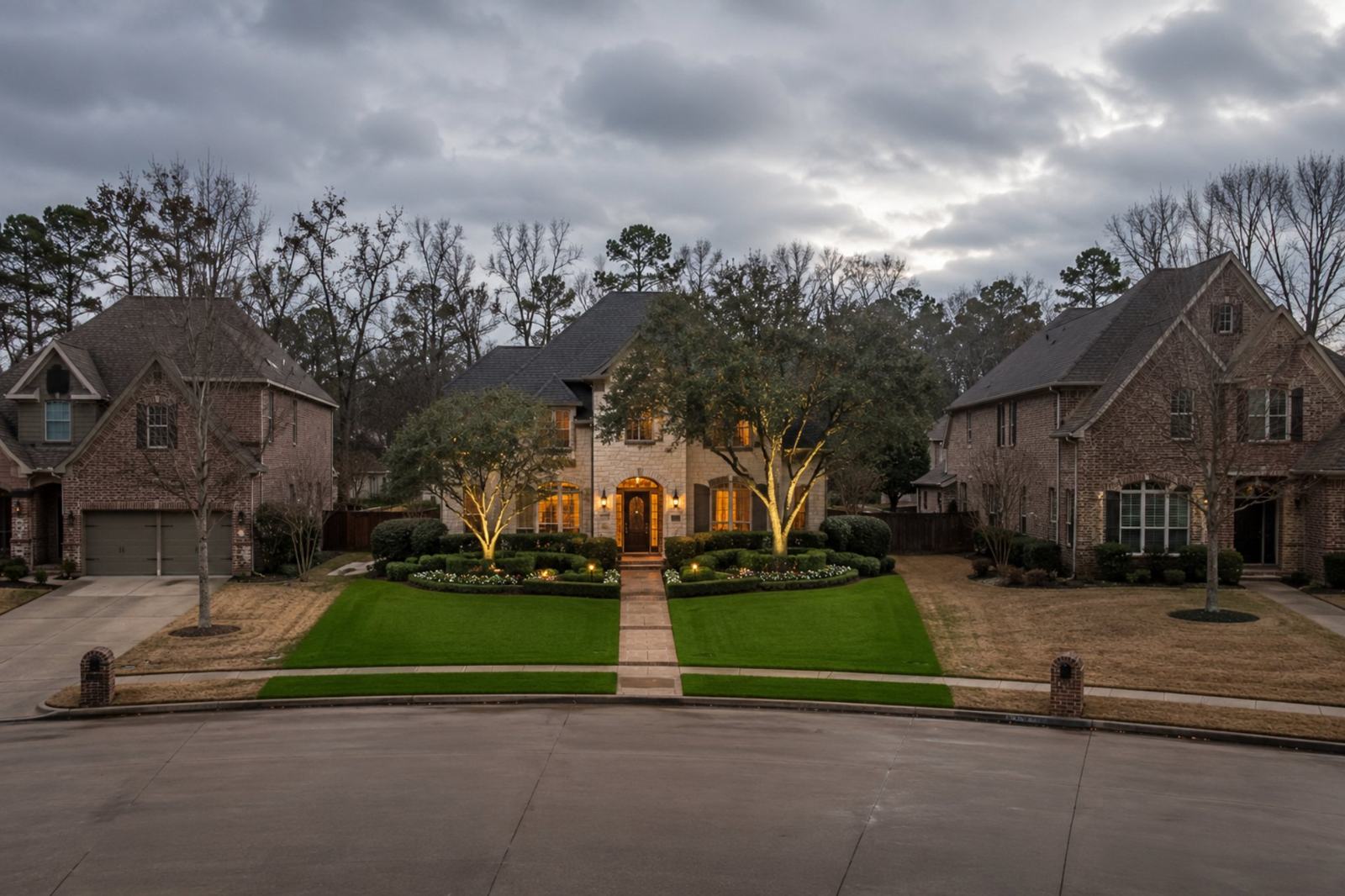 Dormant
Super Grass™
Dormant
Dormant
Super Grass™
Dormant
The neighbors are the color of a paper bag. The one in the middle looks alive.
The Spring
Green all winter.
Gone by summer.
Your lawn comes back underneath it.
As the soil warms in spring, the rye thins out and your warm-season lawn wakes up beneath it. We manage the handoff with mowing height and timing so the grass you live with all summer starts strong. The exact timing follows the weather, not the calendar.
Questions
What people ask first.
Is Super Grass™ sod?
No. Super Grass™ is a winter overseed, a triple-blended perennial ryegrass sown over the lawn you already have. It keeps the yard green through the cold months, then fades on its own when the St. Augustine comes back in spring. Nothing is torn out.
When does Super Grass™ go in?
Once a year, in October. The calendar fills before the seed goes down, so the sooner we start, the better.
Does it cover the front and the back?
It covers the areas on your estimate. Front yard, back yard, or the whole property. Your estimate shows exactly what is included.
Reserve
Reserve your winter green.
We install once a year, in October, and the calendar fills before the seed goes down. Reserve now to hold your place. Regular mowing and care continue all winter.