The Basics · Specialty Pruning
The cut is a skill.
Crape myrtle, fruit trees, ornamentals, structural pruning of specimen plants — the cut is a craft. Wrong cuts shorten a tree by years.
The Premise
The worst pruning is loud.
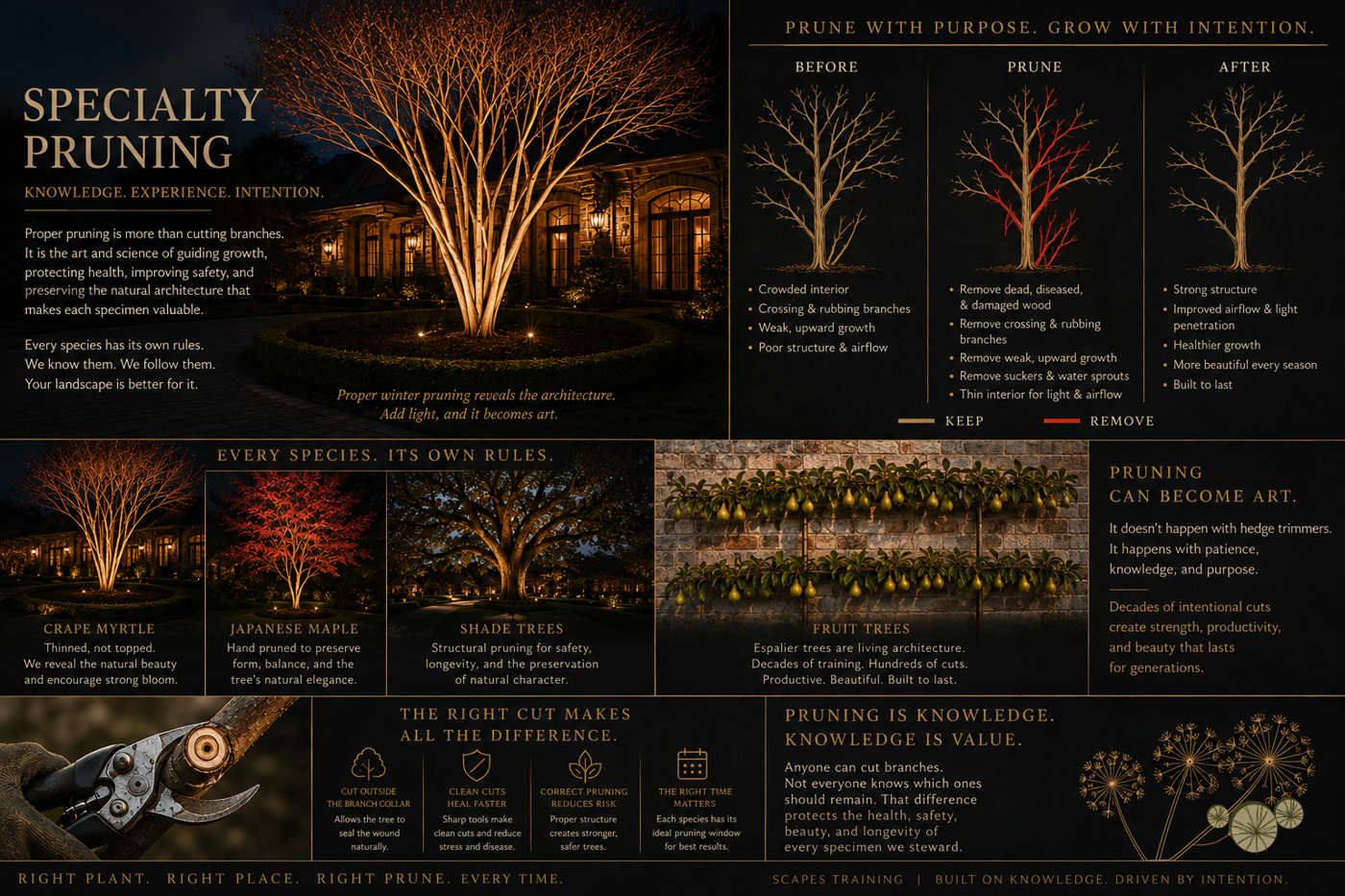
On the Gulf Coast, every February a wave of crape myrtles is topped — hatracked into stumps by crews that do not know the species. The tree survives. It does not thrive. And it loses two years of architecture every winter.
Scapes prunes specimen and ornamental plants on the species' rules. Crape myrtle gets thinned, not topped. Fruit trees get a structural cut while dormant, a maintenance cut after bloom. Roses get cut to the third bud break. Junipers and azaleas are tip-pruned by hand, never sheared into balls.
The reason is photographic. A naturally-pruned specimen reads correctly in every season. A sheared one reads correctly in one.
Winter
Living art.
A properly pruned crape myrtle in winter is one of the most beautiful trees in the landscape.
With every leaf gone, the architecture is exposed. Every branch, every curve, every line becomes visible. What was hidden all summer becomes sculpture. Add a single warm uplight beneath it, and on the right evening it rivals a black-and-white photograph by Ansel Adams. It becomes a piece of living art.
That's the difference.
The Guide
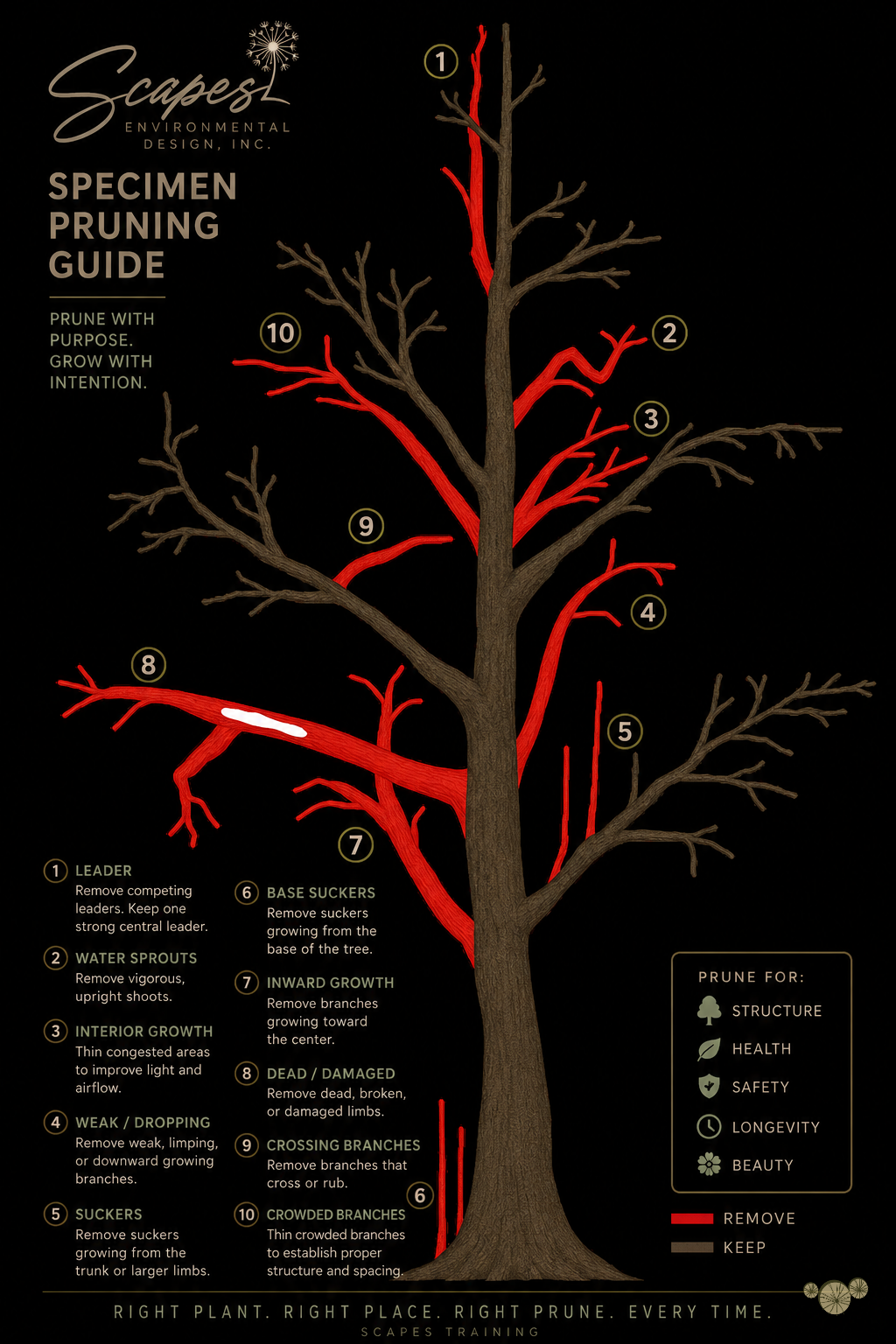
Ten cuts, and why.
This is what our crews are trained on. Red comes off, brown stays — leader, water sprouts, interior growth, weak and dropping limbs, suckers, base suckers, inward growth, dead and damaged, crossing branches, crowded branches. Every cut has a reason behind it.
The Knowledge
Better cuts, not more.
Most people prune a crape myrtle for size.
We prune it for structure. 18" cuts from the V. You know or you dont.
The irony is that proper pruning doesn't require more cuts.
It requires better cuts.
It doesn't require more labor.
It requires more knowledge.
Understanding where to cut, what to leave, how the species responds, and what the tree should look like five years from now is what separates a laborer with a pair of loppers from someone who understands horticulture.
Anyone can remove branches.
Not everyone knows which ones should remain.
That difference is what protects the health, safety, beauty, and longevity of every specimen in your landscape.
Begin
Prune the specimens.
A specimen pruning walk in January. We document every tree, identify the cuts, and schedule the work by species.